
- Energy Efficiency
Energy Storage & Efficiency: Practical Ways to Reduce Business Energy Costs
Compare thermal storage, batteries, variable-speed control and heat recovery to identify practical energy savings and a worthwhile return on investment.
Lower energy bills, reliable processes and a worthwhile return on investment: these are the reasons to improve how your business uses and stores energy. The right solution starts with the job you need done—not a particular product.
Why combine energy efficiency and storage?
Efficiency reduces the energy needed to perform a task. Storage lets you produce or purchase energy at one time and use it later. Both can reduce costs, but they do different jobs. Storage introduces losses, so a lower bill does not automatically mean lower total consumption.
For a factory, hotel, cold store or commercial building, the opportunity may be to reduce wasted heating and cooling, avoid running equipment unnecessarily, use more on-site solar or reduce electricity demand peaks (peak shaving).
Store heat or cooling where that is what you need
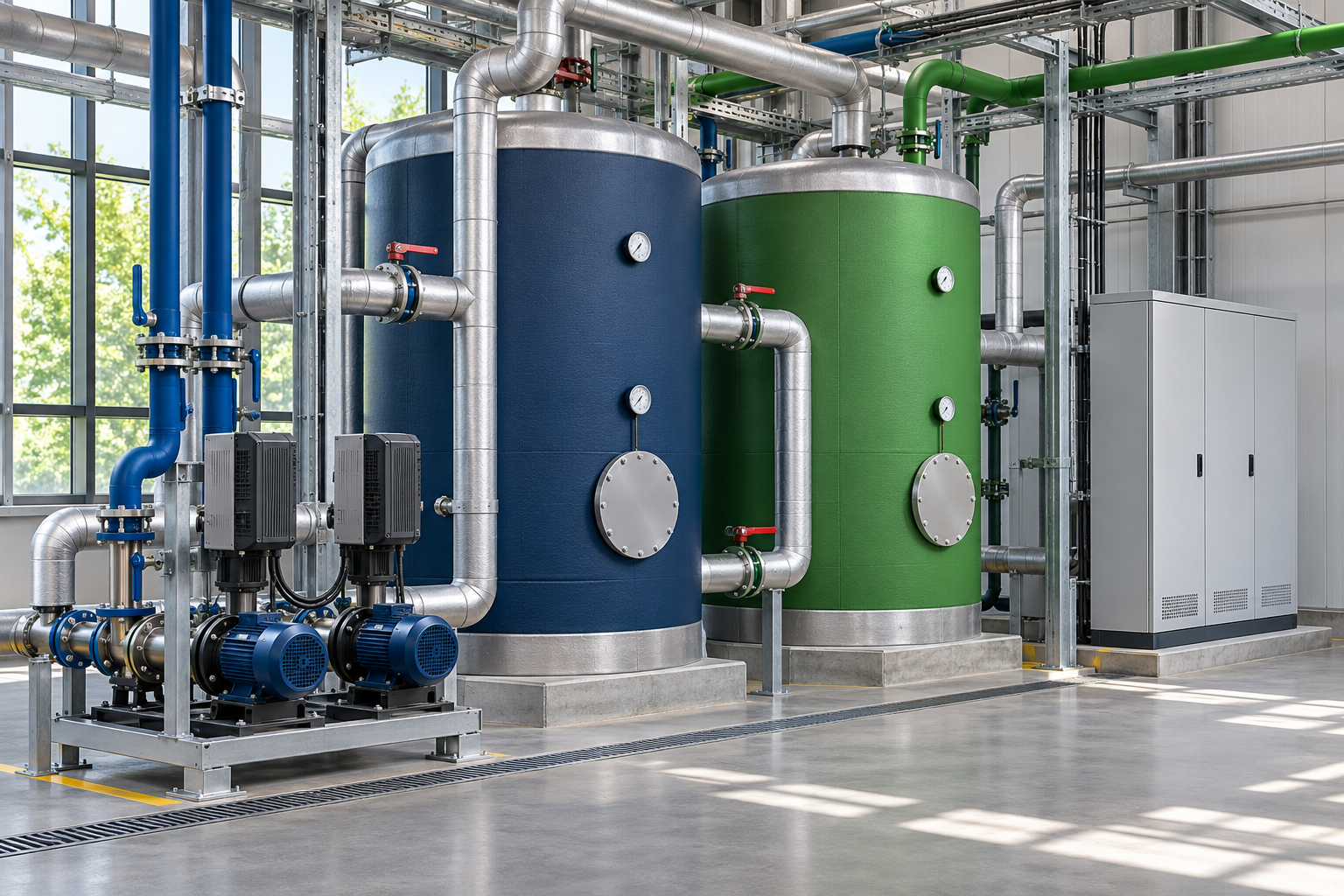
Hot water storage: an insulated tank can store heat from a heat pump, electric heater or recovered process heat. Heating can be scheduled around production needs, solar availability and electricity prices, while keeping the required temperature and hygiene controls.
Chilled water, glycol and ice storage: produce cooling ahead of demand and use it later. This can reduce the peak load on chillers or compressors and help manage short process-demand peaks. Glycol is a heat-transfer fluid; suitable tank capacity, temperature difference and system design determine how much cooling is stored.
Phase-change materials: ice and other materials store and release heat as they change phase. They can provide useful storage within a selected temperature range. Suitability depends on the process, available space, heat-transfer rates and operating costs.
Thermal storage is not free energy. Insulation losses, pumps and charging temperatures affect performance; making ice, for example, can require more chiller energy than producing chilled water. We compare the complete system and its tariff benefit.
Use a battery when electrical flexibility is needed
A battery stores electricity for later use. It can support peak shaving, solar self-consumption and suitable backup arrangements. For heating or cooling alone, thermal storage may be worth comparing with a battery because the process ultimately needs heat or cooling rather than electricity.
The best choice depends on demand, operating hours, space, losses, controls and the required reliability. Read about commercial and industrial batteries.
Control equipment to match the real demand
Variable-speed drives (VSDs): reducing the speed of suitable pumps, fans or compressors can save energy when full output is not needed. Controls must match the process and equipment operating limits.
A drive is not automatically an efficiency upgrade. Equipment that must run continuously at full output may gain little speed-control benefit, while the drive adds its own losses. We assess the system, including minimum flow, static pressure, motor suitability, harmonics and protection.
Better sequencing and setpoints: coordinate equipment, remove unnecessary simultaneous heating and cooling, and avoid keeping oversized plant running for a small load. Practical control changes can sometimes deliver savings before major equipment is replaced.
Recover useful heat and make better use of solar
Heat rejected by refrigeration or other processes may be useful for water heating or another nearby demand. The temperature, timing and quantity must match; heat recovery can reduce the energy otherwise purchased to supply that heat.
Combined heat and power (CHP) produces electricity and useful heat together—it is generation, not storage. Its business case depends on sustained useful heat demand, fuel costs, maintenance and emissions compared with alternatives.
Solar PV can supply heat pumps, chillers and battery charging. Scheduling flexible operation or charging thermal storage during solar production can increase self-consumption. PV supplies electricity rather than directly improving equipment efficiency.
How do you know which investment makes sense?
Start with your bills, interval data and the operating requirements of the process. Measure electrical loads and relevant temperatures, flows and operating times to establish a baseline. Compare simple control changes and efficiency improvements before selecting storage.
The assessment should separate annual energy savings (kWh), demand-charge savings and reliability benefits. Include capital costs, storage losses, maintenance, degradation where applicable, finance costs and current incentives. Check the Grants & Rebates page for verified opportunities; eligibility depends on the program and project.
Start with an energy-efficiency or electrical audit
Energy-efficiency audits identify where energy is used, where it is being wasted and which operational or equipment changes offer worthwhile savings. We tailor the assessment to the facility and decision; where required, formal audits can follow the applicable AS/NZS 3598 requirements.
Electrical infrastructure audits assess the condition, loading, capacity and suitability of the installation before new storage or other equipment is added. The agreed scope can cover switchboards, transformers, distribution, protection, earthing, available documentation and issues requiring further inspection or testing.
Combined, these assessments help establish both the business case and the infrastructure changes needed to implement the project.
How Energy Engineers can help
We provide site measurements, energy assessments and independent comparisons of practical options. We explain the findings and can prepare an investment-grade report covering the measured baseline, proposed changes, project costs, annual savings, cash flow, payback, return on investment and sensitivity to key assumptions.
Our support includes engineering design and specifications, equipment selection, independent review of designs and supplier proposals, and advice on infrastructure changes needed to integrate the solution.
We also provide client-side engineering project management, procurement support, contractor coordination, shutdown planning, installation oversight and commissioning support. Follow-up measurements can verify performance and savings.
Discuss your energy project or call 07 2111 8669.
Technical references checked 7 November 2026: Australian Government motor and VSD guidance; refrigeration and heat recovery; ARENA thermal storage guide; NSW EPA cogeneration guidance.

Share Article:
 Brisbane, AU
 (07) 2111 8669
