Equipment tripping, hot motors, flickering lights or high demand charges? Start with the symptoms below.
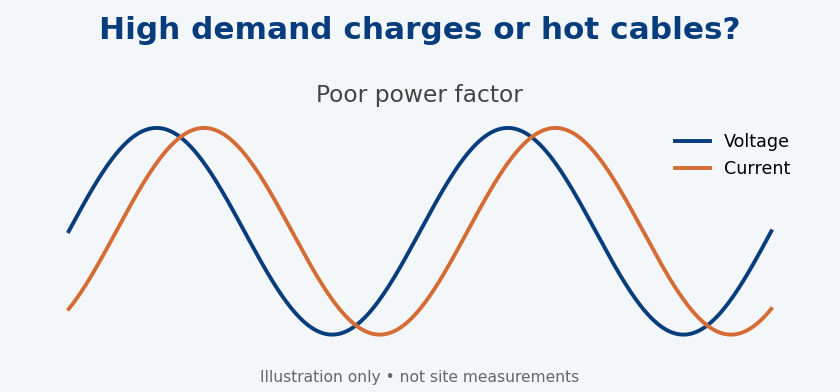
High kVA demand or hot cables?
Potential solution: Correct lagging power factor with suitable capacitor banks or dynamic compensation. Leading power factor needs a different approach; adding capacitors can worsen it.
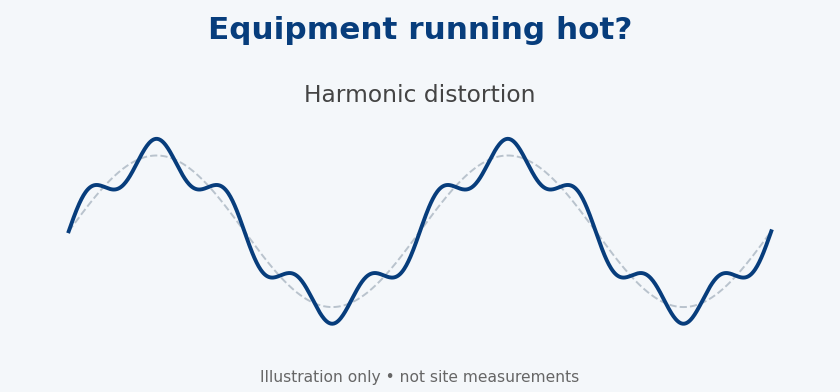
Overheating, nuisance trips or stressed equipment?
Potential solution: Measure distortion and consider suitable harmonic filters, line reactors or lower-harmonic drives.
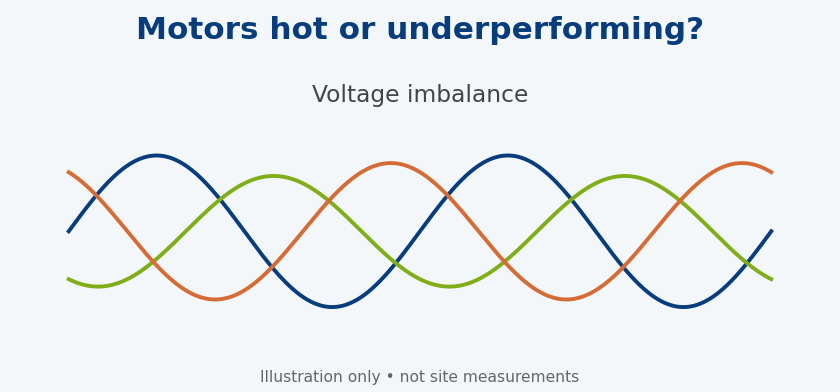
Motors overheating or losing performance?
Potential solution: Investigate the supply, phase loading and connections; rebalance loads or correct the underlying fault.
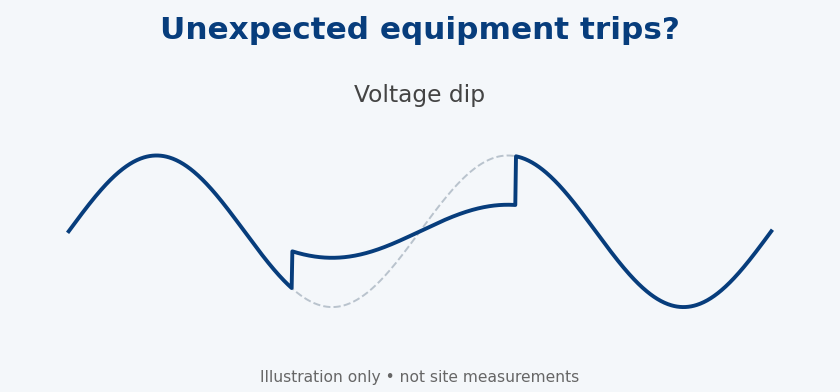
Equipment trips when loads start or a network event occurs?
Potential solution: Investigate the cause and assess controls, ride-through equipment, UPS or a suitably designed battery system.
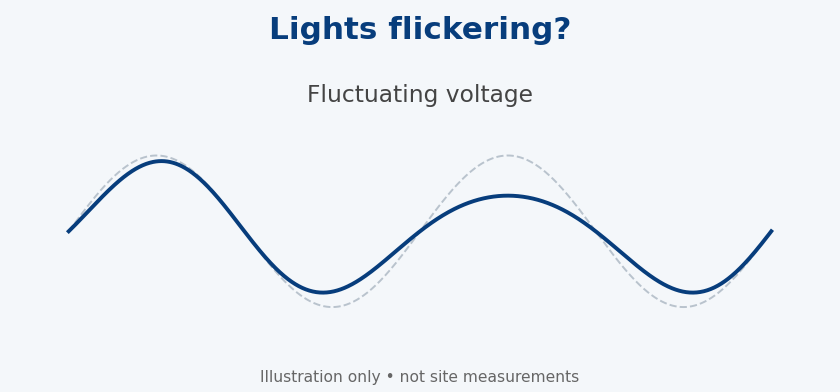
Lights flicker or voltage changes as machinery cycles?
Potential solution: Consider load sequencing, soft starters, dedicated supplies or dynamic voltage support.
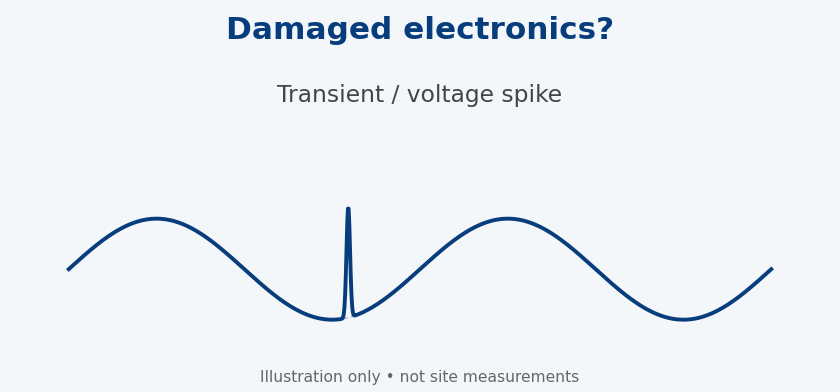
Electronics fail or controls behave unpredictably?
Potential solution: Review coordinated surge protection, earthing, bonding and switching suppression.
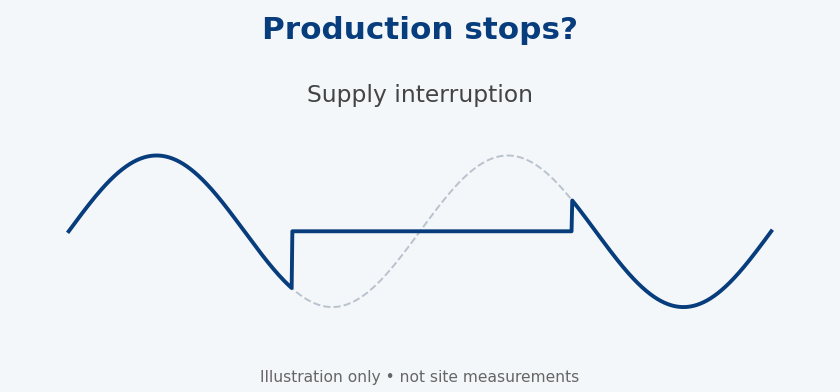
Production stops when the power goes out?
Potential solution: Assess critical loads and suitable UPS, battery backup or generator arrangements.
Does this sound familiar?
Several problems can produce similar symptoms. We measure the installation to identify what is happening before recommending corrective equipment.
Lagging power factor: correctly selected capacitor banks or dynamic reactive-power compensation can reduce unnecessary current upstream of the correction point, reduce heating losses and release electrical capacity.
Leading power factor: adding capacitors can make it worse. Solutions may include correcting existing capacitor-bank controls, removing excess capacitance or using suitably selected reactors or SVG/STATCOM equipment.
Lower current means lower resistive losses in affected cables and transformer windings, saving energy. Correcting power factor can also reduce demand charges where your tariff bills in kVA. The useful power required by your machinery remains; we quantify actual kWh and dollar savings for your site.
Harmonic distortion: distorted current and voltage can increase heating and disrupt equipment. Potential solutions include active or engineered passive filters, line reactors and lower-harmonic drives.
Voltage dips (sags): short voltage reductions can trip sensitive equipment. Investigate the source, review protection and control settings, and consider suitable ride-through equipment, a UPS or a specifically designed battery system.
Voltage swells: short voltage increases may stress equipment. Review switching events, network conditions, voltage controls and equipment protection.
Persistent high or low voltage: investigate network supply, transformer settings and voltage drop within the installation. Solutions can include network correction, approved tap changes or cable upgrades.
Voltage imbalance: unequal phase voltages can increase motor heating and losses. Check supply conditions, phase loading and connections; rebalance loads or address the underlying network or installation fault.
Flicker and rapid voltage changes: fluctuating loads can cause visible flicker or unstable operation. Consider load sequencing, soft starters, dedicated supplies or dynamic compensation.
Transients, surges and spikes: switching or lightning events can damage electronics. Review coordinated surge protection, earthing, bonding and switching suppression.
Interruptions and blackouts: protect critical loads with an appropriately designed UPS, battery backup or generator arrangement, and investigate recurring supply faults.
Electrical noise, notching and interference: investigate switching equipment, drives and signal coupling. Solutions may include filters, shielding, cable separation and improved bonding.
Frequency variations: investigate the grid, generator or islanded supply. Review generator controls, load steps and equipment operating limits.
Resonance and capacitor-bank problems: review harmonics, switching and system impedance. Correct bank sizing and controls; consider detuned banks or purpose-designed filtering.
Neutral overheating and excessive neutral current: check harmonic currents, phase loading and connections. Solutions may include load changes, suitable filtering and neutral-conductor upgrades.
These are potential measures, not interchangeable fixes. Measurements establish which problem is present, where it originates and what performance the solution must deliver.
Reducing excessive reactive current, harmonics and voltage imbalance can reduce avoidable heating losses and improve the operation of affected equipment.
We separate electricity savings from demand-charge savings and avoided downtime. Filters and compensation equipment also consume energy, so we assess the net benefit rather than promising a fixed percentage saving.
The result is a practical business case: expected annual kWh and dollar savings, implementation costs and payback, alongside reliability benefits.
We review your symptoms, electricity bills and operating records, then measure the relevant power quality conditions. We can also help configure your measurement equipment, analyse existing data and review events remotely where the equipment and connection support it.
Design and specifications: we define equipment performance requirements, assist with equipment selection, and develop engineering designs and specifications. We independently review designs, proposed equipment selections and supplier proposals for suitability, integration with your installation and the agreed performance requirements.
Infrastructure advice: we assess the changes needed to accommodate power quality equipment, including switchboard capacity and space, connection points, cabling, protection, earthing, ventilation and access for maintenance.
Engineering project management: we provide client-side coordination of suppliers and contractors, installation planning, shutdown coordination, construction oversight and commissioning support.
We explain the options, help you plan practical changes to your installation and verify the agreed performance after corrective work.
You receive a written engineering report and a plain-language explanation of the findings, practical recommendations and next steps.
Where required, we can prepare an investment-grade assessment covering measured baselines, options, costs, savings, cash flow, payback, return on investment and risks. We can help verify the result after corrective work.
Tell us what is happening, which equipment is affected and when.
Need help with electrical inspections, power quality, energy efficiency or an engineering project? Tell us what you need using the form and we’ll be in touch.
Need help with electrical inspections, power quality, energy efficiency or an engineering project? Tell us what you need using the form and we’ll be in touch.
 Brisbane, AU
 (07) 2111 8669
 [email protected]
Follow us at:
